Difference Between Manfrotto One and Ricoh Gr Iv Explained
Category: Cameras
Introduction
When shoppers compare the Manfrotto One and the Ricoh GR IV they are often comparing two different kinds of photographic investments: one focused on supporting and stabilizing image-making, the other focused on delivering a complete, pocketable imaging tool. At first glance the comparison seems odd — Manfrotto is synonymous with support systems and accessories, while the Ricoh GR line is known for compact, fixed‑lens cameras favored by street and travel photographers. This article explains what each product is intended to do, how photographers and content creators typically use them in the real world, and which buyer profiles will get the most value from one choice or the other.
Context and who cares
Buyers usually fall into a few groups when evaluating these names. Some want stability and improved results from devices they already own — for them, a Manfrotto One (a compact support/stabilizer in Manfrotto’s product family) is an attractive, lower‑risk upgrade. Others want a highly portable camera that delivers image quality and instinctive handling for street, travel, and documentary work — that’s the space the Ricoh GR series occupies, and the GR IV (as the successor in that lineage) would be considered by people who prize discretion and straight-to-the-point controls over interchangeable lenses.
This piece explains the practical differences in plain terms: what each product does best, how they shape photographic workflows, realistic pros and cons, a direct comparison table to clarify tradeoffs, and a buyer’s guide to help decide which investment is right for particular goals.
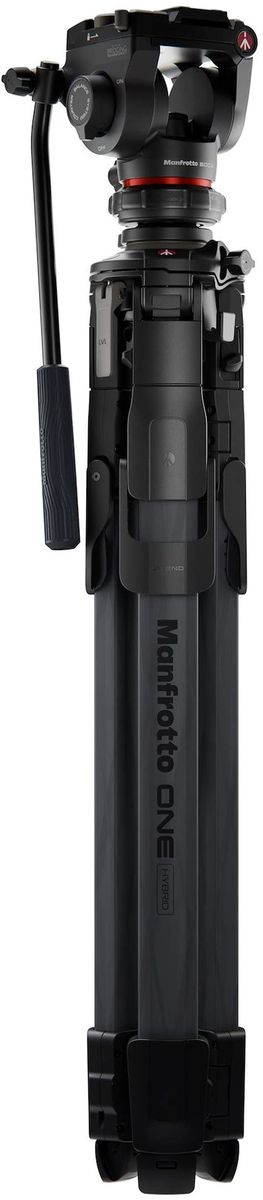
What is the Manfrotto One?
Manfrotto is best known for tripods, heads, stabilizers, and camera support accessories. The product labeled "Manfrotto One" is positioned as a compact, travel‑friendly support solution in that ecosystem — designed for creators who need solid stabilization without the bulk of a professional tripod. It typically targets smartphone shooters, mirrorless camera users, and vloggers who value quick setup, robust build quality, and compatibility with a range of small cameras and mobile devices.
Real-world use cases for a Manfrotto One include:
- Run-and-gun travel photography where a full tripod is impractical but some form of support improves sharpness for low‑light shots.
- Vlogging or live streaming where handheld fatigue is an issue and a compact mount or mini‑tripod improves framing stability.
- Product and tabletop photography for content creators who need repeatable framing and modest height adjustments without a bulky kit.
- Timelapse and long-exposure work with small cameras where portability and ease of use matter.
How it fits into a kit
As an accessory, the Manfrotto One complements existing camera gear. It does not change image quality directly but enables steadier shots, longer exposures, and more consistent composition. It is often chosen by photographers who already own a competent camera and want to upgrade their support system without a major weight penalty.
What is the Ricoh GR IV?
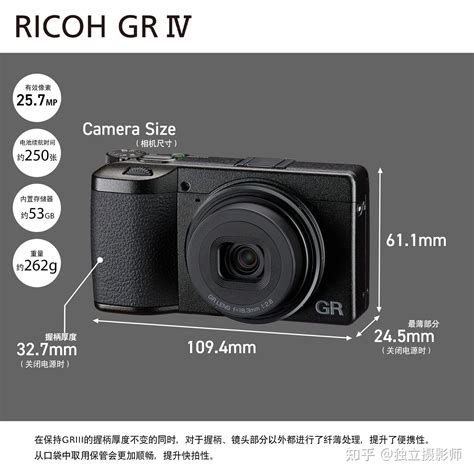
The Ricoh GR line is a series of premium compact cameras built around a fixed prime lens and a compact body. These cameras are celebrated for their pocketable form factor, fast prime optics, and intuitive controls tailored for street and documentary photography. The GR IV, as the next iteration in this family, would be expected to continue that heritage: a small, discreet camera that delivers high image quality in a form more portable than a mirrorless system with an interchangeable lens.
Real-world use cases for a Ricoh GR IV include:
- Street and documentary photographers who want a low-profile camera that can be used unobtrusively in crowded environments.
- Travel photographers who prioritize minimal carry weight and the ability to produce high-quality JPEGs straight out of camera.
- Everyday carry photographers wanting a camera that encourages visual experimentation and spontaneous shooting.
- Photographers who prefer a fixed focal length and the discipline it brings to composition and technique.
How it fits into a kit
The Ricoh GR IV is often used as a primary camera by those who shoot compact, or as a secondary, backup body by professionals who need an unobtrusive option. It replaces or reduces the need for a larger system in scenarios where discretion, speed, and portability are the priorities.
Looking for the best Cameras & Photography deals on Amazon?
Shop Amazon →Detailed product analysis
Design and ergonomics
Manfrotto One designs emphasize modularity, quick setup, and stability. Typical features for this class of support include foldable legs, a lightweight but durable construction, and a head or mount system compatible with smartphones and small cameras. Ergonomically, the focus is on minimizing setup friction — quick locks, compact folded size, and user-friendly footings for uneven ground.
The Ricoh GR IV design philosophy centers on pocketability and rapid access. The body is compact, with a control layout that favors manual adjustment of exposure, ISO, and white balance without diving into menus. Physical dials, textured control surfaces, and a thumb-operated interface are intended to support fast shooting. The fixed prime lens means the camera can stay thin and unobtrusive while still offering high-quality optics.
Image-making and stability
Manfrotto One improves image sharpness indirectly by enabling steadier shooting. For long exposures, macro work, or telephoto compositions with small mirrorless cameras, a compact support can be the difference between a keeper and a miss. It is also valuable for video: even modest stabilization reduces unwanted motion and gives handheld footage a more professional look.
The GR IV’s contribution is direct — it creates the image. Its fixed lens and tuned processing pipeline aim for sharpness, microcontrast, and color rendition that suits street and documentary aesthetics. The lack of interchangeable lenses forces a photographer to work with one focal length, which many find creatively liberating. Where stabilization is concerned, pocket compacts typically rely on sensor shift or electronic stabilization, but a small accessory tripod (such as a Manfrotto One) can be combined with a GR camera to enable low-light or long‑exposure shots.
Operational workflow
Using a Manfrotto One is part of a support-oriented workflow: scouting a spot, deploying the support, composing, and then shooting with the camera mounted. This workflow suits planned captures, tripod-assisted portraits, product work, and controlled timelapses.
Using the Ricoh GR IV is a different workflow: quick in-and-out shooting, relying on the photographer’s judgment and the camera’s responsiveness. The GR line’s strength is to let the user capture decisive moments without fuss — fewer adjustments to the physical setup and more emphasis on reading the scene.
Pros & Cons
Manfrotto One — Pros
- Compact and travel-friendly support that improves sharpness for handheld cameras.
- Versatile: compatible with smartphones, small mirrorless bodies, and compact cameras.
- Allows long exposures, timelapses, and steadier video without carrying a full‑size tripod.
- Durable construction; built for repeated outdoor use and quick deployment.
Manfrotto One — Cons
- Does not improve image quality by itself — it is an accessory rather than a capture device.
- Limited by payload capacity; not suitable for heavy DSLRs with large lenses.
- Extra item to carry and manage during fast-moving shoots.
Ricoh GR IV — Pros
- Pocketable camera that encourages spontaneous street and travel photography.
- Fixed prime lens and compact body favor sharp, consistent results and fast handling.
- Discreet: small form factor reduces photographer visibility in sensitive environments.
- Simplified workflow with responsive controls built for single-handed operation.
Ricoh GR IV — Cons
- No interchangeable lenses — less flexibility for varied focal-length needs.
- Smaller body may sacrifice grip comfort for larger hands or extended handheld shooting.
- Battery life on compact cameras can be limited compared with larger systems; planning for spares is often necessary.
Comparison table
| Category | Manfrotto One | Ricoh GR IV |
|---|---|---|
| Type | Support/accessory (compact tripod/stabilizer) | Compact fixed‑lens camera |
| Primary purpose | Stabilization for smartphones and small cameras | Discreet, high‑quality image capture for street and travel |
| Best for | Vloggers, travel shooters needing support, timelapse | Street photographers, everyday carry, travel photographers |
| Portability | Very portable; added item to carry | Extremely portable — designed to be carried on body |
| Image control | None directly — enables steadier capture with a separate camera | Direct — lens, sensor, and processing determine images |
| Flexibility | Flexible mounting options for many devices | Limited focal length but high optical quality |
| Typical buyer concerns | Weight, stability, compatibility, setup speed | Image quality, pocketability, ergonomics, battery life |
Buying guide: Which one to choose and why
Choosing between a Manfrotto One and a Ricoh GR IV is not a simple “either/or” for most photographers — it is more often a decision about priorities and how the gear will be used in the field. Use the following checklist to align choice with goals.
1. Define primary shooting scenarios
If the goal is to shoot handheld, candid street photography while moving through a city, the Ricoh GR IV (or a camera in the GR family) is the equipment that directly supports that use case. If most shoots involve deliberate composition, low-light handheld limitations, or tabletop/product photography, the stabilizing capability of a Manfrotto One will pay off.
Looking for the best Cameras & Photography deals on Amazon?
See Deals →2. Consider portability and kit consolidation
For lightweight travel where every ounce counts, a Ricoh GR IV offers camera functionality in a pocketable package and can replace heavier interchangeable‑lens setups. However, a compact support like the Manfrotto One is still small enough to be included in a minimalist kit and will expand the creative options available with any camera in the bag.
3. Evaluate creative priorities: discipline vs flexibility
The fixed‑lens GR approach encourages composition discipline and often produces stronger, more consistent results within its focal length. In contrast, a support accessory enables better use of existing lenses (telephoto, macro) by stabilizing them. Buyers who want to refine technique and embrace a single focal length will be drawn to the GR; buyers seeking versatility with multiple lenses will appreciate the Manfrotto One’s stabilizing benefits.
4. Budget and long-term value
Comparing value requires thinking beyond sticker price: a Manfrotto One is usually a lower cost, high-impact upgrade for users who already own cameras. It can extend the utility of multiple devices. A Ricoh GR IV is a standalone imaging purchase: it replaces or complements a camera body and is a larger investment in a single-purpose tool.
5. Real-world buyer questions to answer before purchase
- How often will the item be carried versus left at home? (Pocket camera vs accessory to pack.)
- Is the priority making better photos directly (sensor/optics) or making existing gear easier to use (stability and framing)?
- Will the user benefit more from a disciplined prime focal length, or from flexible lens choices supported by steadier shooting?
- Are there size or weight limits imposed by travel and daily carry habits?
Practical pairing: why both can make sense
It is worth noting that the two items are complementary for many photographers. A compact camera such as the Ricoh GR IV excels in spontaneous situations, but adding a compact support like a Manfrotto One to the kit unlocks long-exposure night shots, tripod-mounted self-portraits, and more stable video — all without switching to a heavier, bulkier tripod. For photographers who want both discretion and occasional stability, owning both is a practical compromise.
Conclusion
The difference between a Manfrotto One and a Ricoh GR IV is fundamentally a difference of role: one is a support accessory aimed at improving stability and compositional consistency for a range of devices; the other is a purpose-built compact camera designed for discreet, high‑quality image capture. The right choice depends on whether a buyer needs an immediate uplift in image quality via a new camera optimized for street and travel work, or a tool that enhances the performance of existing equipment by reducing camera shake and expanding controlled shooting techniques.
Photographers who prize portability and decisive shooting will lean toward the Ricoh GR IV aesthetic, while creators who want to squeeze better results from multiple cameras — and who do low‑light, timelapse, or product work — will find a Manfrotto One indispensable. For many users, the best outcome is not a binary choice: combining a compact camera with a compact support yields the flexibility to shoot fast and shoot steady, covering more photographic ground with less compromise.